The words we speak to one another hold power.
Imagine if every word we spoke was laid across our table like Scrabble tiles—visible, permanent, impossible to take back. Would they bring nurturing and care? Would they build someone up, or slowly tear them down?
In honor of Mental Health Awareness Month, I’ve been thinking about the quiet architecture of care—the ways we are shaped not only by what is said to us, but by how we are held, seen, spoken to, and loved across a lifetime.
Motherhood, when I look at it now, feels less like a single role and more like a lineage. A thread passed through women, sometimes intentionally, sometimes imperfectly, but always leaving something behind in the hands of the next generation.

My mother is part of that thread.
She cared for me in the ways she knew how—steady, present, and deeply committed. There were seasons where life felt complicated, where understanding each other required more patience than either of us knew how to name. And yet, beneath it all, there was care. Real care. The kind that shows up, that persists, that tries again even when it’s hard.
As I’ve grown, I’ve learned to separate intention from expression. To understand that love does not always arrive in perfect form, but it still leaves its mark.
My grandmothers, on both sides, gave me different languages of love.
One taught me resilience softened by grace—the ability to endure without becoming hardened. The other carried a grounded wisdom, a strength that didn’t need to announce itself. From both of them, I learned that love is not only something we feel, but something we practice. Something we pass down, even unconsciously.
And then there are my aunts.
Each one has offered me a different window into what it means to nurture and to belong. Some through laughter, some through honesty, some through quiet presence that asks for nothing in return. They expanded my understanding of motherhood beyond biology or definition. They showed me that care can come in many forms, and still be deeply formative.
When I think about mental health, I don’t separate it from any of this.
We often speak about healing as something individual, but so much of it is relational. We are shaped by the emotional environments we grow up in—by what was modeled, what was missing, what was survived, and by the words repeatedly spoken around us.
Words matter more than many people realize.
The nervous system remembers tone, tension, ridicule, dismissal, chronic criticism, and emotional inconsistency the same way it remembers tenderness, safety, honesty, and gentleness.
There are forms of harm that leave no visible bruises:
verbal abuse,
gaslighting,
gossip,
chronic invalidation,
the quiet erosion of trust.
And because these things are often normalized within families or communities, their impact is frequently minimized.
But common does not mean harmless.
When someone’s reality is repeatedly denied, when their emotions are mocked, or when they are labeled “crazy” for expressing pain, concern, intuition, exhaustion, or emotional truth, it creates more than hurt feelings—it creates disorientation. Over time, these patterns can deeply affect a person’s sense of safety, self-trust, and emotional wellbeing.
This is especially important for children.
Children may not understand every conversation happening around them, but they feel emotional instability. They absorb tension, hostility, silence, inconsistency, gossip, and fear. They learn whether emotions are safe to express. Whether honesty is welcomed or punished. Whether care feels steady or conditional.
The emotional wellbeing of adults shapes the emotional wellbeing of children.
This is why mental health matters for everyone—not only mothers, not only women, not only those in visible crisis. Emotional awareness, accountability, empathy, honesty, and repair help create safer homes, healthier relationships, and more secure generations to come.
Empathy, in this way, becomes its own kind of healing practice. Not excusing harm, not erasing complexity—but widening our capacity to see people in full context while still acknowledging the importance of emotional safety and truth.
I’ve come to understand that I carry pieces of all these women within me. Not as perfection, but as inheritance. Threads of love, resilience, imperfection, devotion, intuition, tenderness, and effort.
And maybe that is what motherhood ultimately is—not just what is given, but what is continued. Not just what is received, but what is transformed as it moves forward.
I am grateful for the love I’ve been given.
And I am still learning what it means to carry it well
When Words Undermine Safety: On CPTSD, Verbal Abuse, and the Quiet Erosion of Trust
There are forms of harm that don’t leave visible marks.
No bruises.
No clear moment others can point to and say, “that’s when it happened.”
And yet, over time, the impact runs deep—into the nervous system, into relationships, into the way a person understands safety itself. The same as our foods choices and daily habits impact our physical wellbeing—words impact our emotional and physiological wellbeing—cumulatively.
Verbal abuse, gaslighting, and gossip are often minimized because they are common. Familiar. Unseen. Even normalized in some family and community dynamics.
But common does not mean harmless.
When words are used to distort reality, dismiss lived experience, or quietly undermine someone’s credibility, the effect is disorienting. A person begins to question their own perception. Their memory. Their instincts. The powerful intuition of a mother is discredited—in turn creating disconnect and division between the loving connection within a family unit.
This is not miscommunication.
This is not sensitivity.
This is the erosion of internal trust.
And over time, that erosion becomes something much more serious—what many come to understand as Complex Post-Traumatic Stress, or Complex Post-Traumatic Stress Disorder.
Unlike a single traumatic event, CPTSD develops through repeated exposure to relational harm—especially in environments where there is no real safety, no repair, and no accountability.
Gaslighting teaches the nervous system that what is real may not be acknowledged.
Verbal abuse teaches it that connection comes with harm.
Gossip teaches it that one’s story can be taken, reshaped, and used without consent.
Together, these experiences don’t just hurt—they rewire how safety is perceived.
The Impact on Families
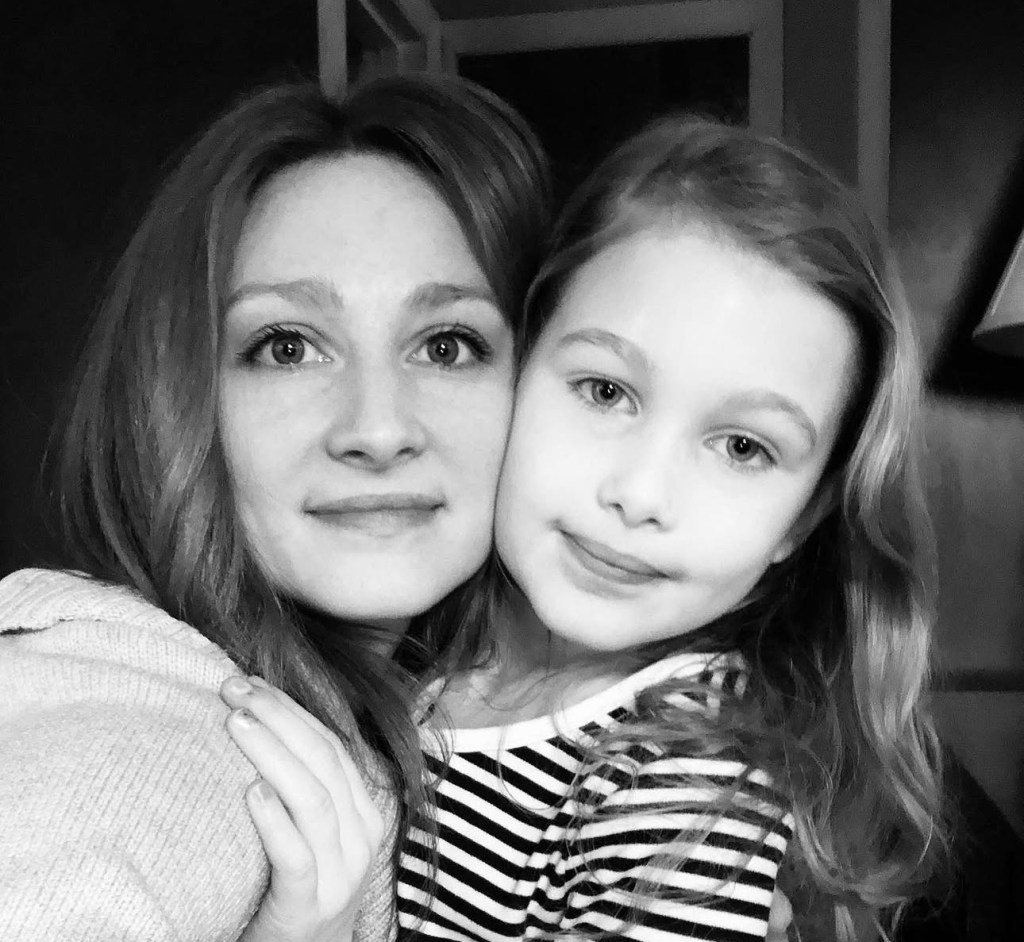
This doesn’t stay contained to one person.
It moves through families quietly.
A parent navigating chronic invalidation may become hyper-aware, protective, and exhausted. Not because they are unstable—but because their system has learned, over time, that threats are not always obvious and safety is not always upheld.
Children, in turn, don’t just hear what is said—they feel what is unspoken.
They sense tension.
They sense when something isn’t right.
They learn, often without words, whether the world around them is trustworthy.
When harmful dynamics like gossip or distortion are present, it doesn’t just affect relationships—it fractures the foundation of belonging.
And without belonging, safety becomes something the body struggles to locate.
Why This Matters
We often measure harm by visibility.
But the nervous system measures it by consistency.
By repetition.
By unpredictability.
By the absence of repair.
A cutting comment said once may sting.
A pattern of dismissal over time reshapes a person’s internal world.
This is why language matters.
Why tone matters.
Why truth matters.
Because empathic care is not a luxury—it is the basis of human connection.
And when it is absent, the cost is not just emotional. It is physiological. Relational. Generational.
A Return to Clarity
Naming these patterns is not about blame.
It is about restoring clarity.
It is about saying:
- Harm does not need to be loud to be real.
- Distortion does not become truth through repetition.
- And protecting one’s peace, one’s children, and one’s wellbeing is not an overreaction—it is responsibility.
There is a difference between conflict and harm.
Between misunderstanding and manipulation.
Learning that difference can change everything.
Moving Forward
Healing does not require perfection.
But it does require honesty.
It requires environments where reality is not denied, where words are used with care, and where accountability is not avoided.
For those navigating the effects of these experiences: your awareness is not the problem. It is part of the path forward.
And for families, communities, and spaces that truly value wellbeing:
Safety is not built through silence.
It is built through truth, consistency, and care.
Here is a book you may like to add to your toolkit for helpful strategies in recovering from trauma:
Best,
Laura

